Jun 27, 2026

Video Marketing in Fresno: How to Spend the Budget So It Actually Drives Business
Every video agency on the first page of Google promises the same three things: high quality, your brand to new heights, and viral success. Read four of those pages in a row and they blur together. None of them answer the question you actually have, which is simpler and harder: if I spend real money on video, will it bring in the right business, or will I end up with a nice clip that sits on a homepage and does nothing.
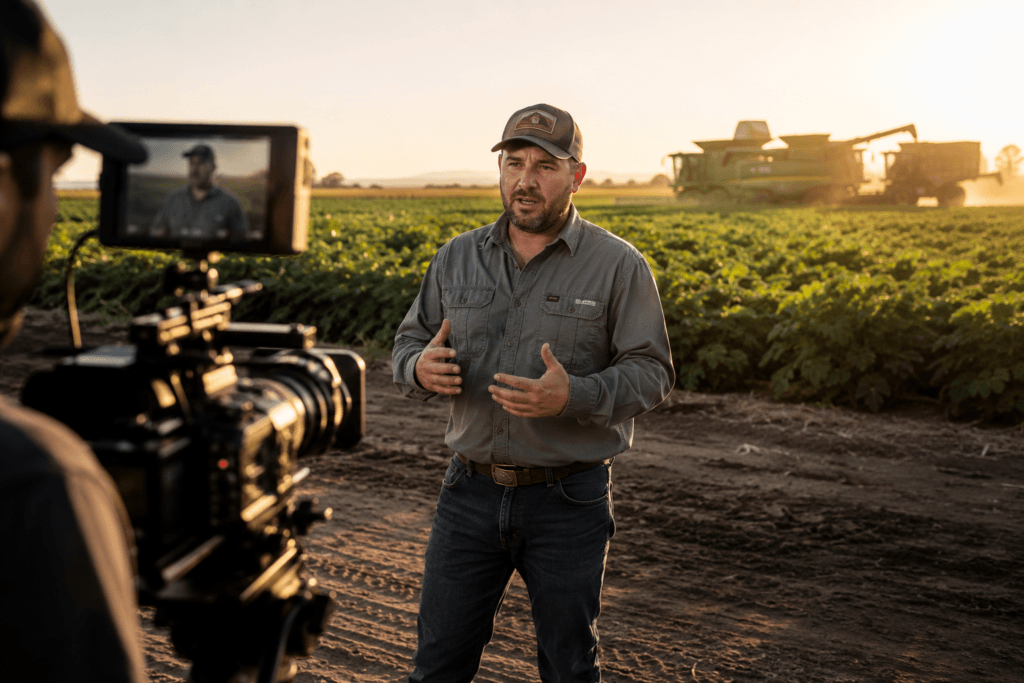
That’s the right question. Here’s a straight answer.
Video marketing in Fresno works best when each video is built for one job and one place to be watched. A 60-second trust-builder on an About page does different work than a paid social ad aimed at strangers. Match the format to the funnel stage before anyone films anything, and a modest budget will outperform an expensive video made with no plan. Most wasted video money in the Valley isn’t wasted on bad cameras. It’s wasted on good footage with no job to do.
What Video Marketing Actually Does for a Central Valley Business
Video earns its place when it shortens the distance between a stranger and a decision. A grower explaining a harvest process, a contractor walking a finished build, a clinic owner answering the question every new patient asks — these do something a paragraph can’t. They let a buyer watch you be good at your job before they ever call.
That matters more here than in a lot of markets. The Valley runs on relationships and reputation. A construction owner in Clovis isn’t choosing a sub off a stock photo. Video lets that trust build before the first handshake, which is exactly the stretch where most deals are won or lost.
What video does not do is rescue a business that hasn’t decided what it stands for. If you can’t say in one sentence why someone should choose you, a camera will just capture the confusion in higher resolution. The strategy comes first. The video makes it visible.
The Mistake That Wastes Most Video Budgets
The most common mistake isn’t cheap production. It’s making a video with no single job.
You’ve probably seen the result. A two-minute company overview that opens with a drone shot of the building, lists every service, includes a founder talking about passion, and ends with a logo. It’s smooth. It’s also doing six jobs at once, which means it does none of them well. Nobody shares it, nobody books from it, and it quietly becomes the thing that “we already tried video.”
The fix is almost boring in how simple it is. Before filming, name the one job: this video exists to get a cold viewer to stop scrolling, or this video exists to make a warm lead trust us enough to call. One job. Everything in the edit serves it. When we map a concept to a funnel stage before we roll a camera, the production gets cheaper and the result gets sharper, because we stop paying for footage that was never going to earn anything.
Match the Video to Where People Will Watch It
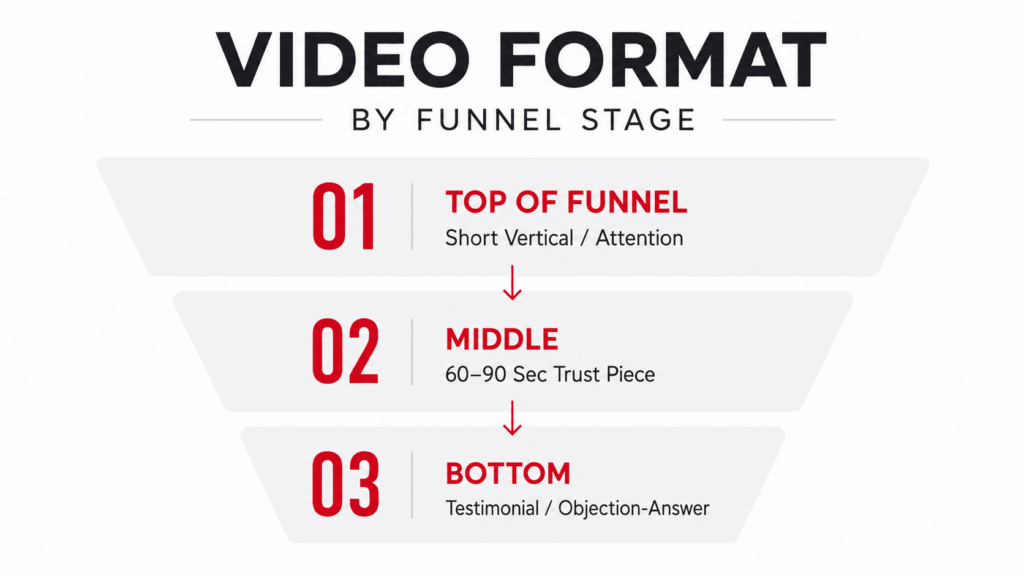
A video’s job is set by where it lives. The same story needs a different cut for a cold Instagram feed than for a sales follow-up email. Here’s how the pieces line up.
Video for the top of the funnel (attention)
Short, vertical, fast. The first two seconds carry the whole thing. This is where the Valley’s reality helps you — a real face on a real job site beats anything that looks like stock. Social media video here isn’t about polish. It’s about a hook good enough that a stranger doesn’t scroll past.
Video for the middle (trust)
This is the work most businesses skip and most need. A 60-to-90-second piece that answers the question a warm lead is quietly asking: can these people actually do what they say. Customer stories, process walkthroughs, a straight explanation of how you work. It lives on service pages, in nurture emails, and in the follow-up after a first call. Corporate video has a bad name because it’s usually generic. Done with a point of view, it’s the most reliable converter you’ll make.
Video for the bottom (the close)
Short, specific, and often unglamorous. A testimonial from a client in the same industry. A quick answer to the one objection that always comes up. These don’t need to be beautiful. They need to remove the last reason someone hesitates.
Three formats, three jobs. Most budgets blow up because they try to buy one video that pretends to do all three.
What Video Marketing Costs in Fresno — and What Moves the Price
Honest answer: it ranges widely, and anyone who quotes a flat number before understanding the job is guessing. A focused single-format shoot is a different number than an ongoing content engine, and both are legitimate depending on what you need.
What actually moves the price is rarely the camera. It’s these:
- How many setups and locations. A day on one job site costs less than three locations across the Valley.
- Whether there’s a strategy or just a shoot. Footage is cheap. Knowing what to shoot and why is where the value sits.
- How much you’ll reuse it. One long interview can become a hero video plus eight short cuts — or one video and a lot of wasted tape, depending on planning.
- Talent, scripting, and motion graphics. These add up fast and aren’t always necessary.
The buyers who get burned are usually the ones who shopped on monthly price alone and signed a long contract before seeing whether the work fit. A low number attached to a vague plan is the most expensive option there is, because you pay again to redo it. Spend on the thinking first. The production is the easy part.
How to Choose a Fresno Video Marketing Agency
Since every agency’s website sounds the same, the website is useless for choosing. Here’s what tells you more.
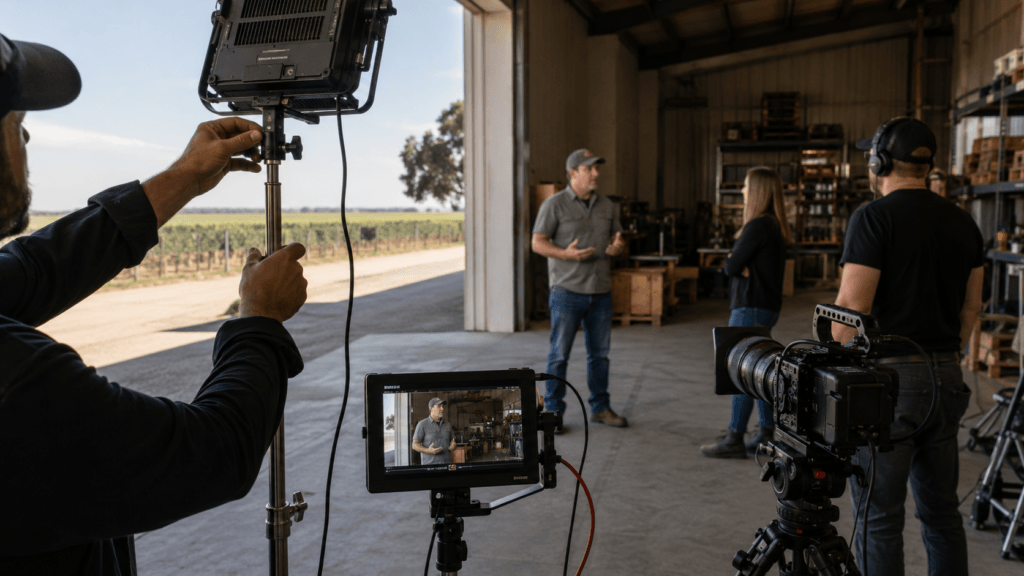
Ask what job they’d give the video before they pitch you a package. A partner worth hiring will ask about your business, your buyer, and what a win looks like — before they talk about cameras. If the first conversation is about their gear and their reel instead of your customer, you’ve learned what you need to know.
Ask to see work in your world, not just their flashiest cut. A cinematic spot for a restaurant tells you little about whether they can make a manufacturing process look clear and trustworthy. Range in your kind of work matters more than range overall.
Ask how they’ll measure it. “Views” is not an answer. Leads, booked calls, time-on-page, replies to a follow-up — the metric should connect to your actual business, and they should name it without flinching.
And weigh whether they understand the Valley. A team that knows the difference between selling to an ag operation and selling to a homeowner in Fig Garden will save you a round of expensive translation. Local isn’t a slogan. It’s knowing the audience before you have to explain it.
Industries That Get the Most Out of Video Here
Video flexes to almost any sector, but a few get outsized returns in the Central Valley because their value is hard to explain in text and easy to show on camera.
Construction and trades win with finished-build walkthroughs and on-site process — proof of craft beats any adjective. Agriculture and food brands have a built-in advantage: harvest, process, and people make footage most industries would kill for. Manufacturers turn a confusing process into a 90-second clip a buyer finally understands. Nonprofits and clinics build trust by putting a real human face on the work. Across all of them, the pattern holds — the more your quality is something people have to see to believe, the more video pays you back.
Frequently Asked Questions
How much does video marketing cost in Fresno? It depends on the job, and that’s not a dodge. A single focused shoot, a testimonial series, and an ongoing content program are three different budgets. The bigger cost driver is strategy versus footage — a clear plan for one video that gets reused ten ways will outperform a cheaper shoot with no plan. Be wary of flat monthly numbers attached to long contracts before anyone has seen whether the work fits. Get the thinking right first; the production cost follows from it.
How long does it take to produce a marketing video? Most single videos run one to three weeks from concept to final cut, depending on scripting, scheduling, and how many revisions. Same-day-style turnarounds exist for simple pieces, but the timeline that matters is the planning ahead of the shoot. A day of clear strategy saves a week of reshoots. If a quote skips straight to “we’ll film Tuesday,” ask what job the video is being built to do first.
Is video marketing worth it for a small business? Yes, when it’s pointed at one job. Small businesses get the best return by starting narrow — one strong piece for the part of the funnel that’s leaking — rather than commissioning a sweeping brand film. A focused 60-second video that answers your buyers’ most common hesitation will usually out-earn an expensive overview nobody finishes watching. Start with the bottleneck, not the budget.
Do I need to run ads, or is organic video enough? Both work, and they do different jobs. Organic video on your site, social, and email builds trust with people already in your orbit. Paid distribution puts video in front of strangers who match your buyer, faster. Most Valley businesses start organic to prove the message lands, then put budget behind the pieces that already perform. Spending on ads before you know which video converts is how budgets disappear.
What kind of video should my business make first? The one that fixes your biggest leak. If strangers aren’t noticing you, make a short top-of-funnel piece. If leads stall before they call, make a middle-of-funnel trust video. If people get close and then hesitate, make a testimonial or an objection-answer. The right first video is a diagnosis, not a default. Name the leak, then build for it.
Why do so many local agencies’ websites sound identical? Because most copy the same template and lead with their own gear and awards. It makes choosing harder, not easier. The tell of a partner worth hiring isn’t a louder homepage — it’s whether the first conversation is about your customer or their camera. Judge the questions they ask, not the adjectives they use.
Start With One Conversation
If video has been on the list for a while and keeps getting pushed, there’s usually a reason, and it’s usually not the budget. It’s that the choice feels risky and every option looks the same. That’s a solvable problem.
Book a 30-minute strategy call. No deck, no hard sell — just a straight read on whether video is worth it for your business right now, and if it is, what the first piece should be. If you already have footage sitting unused, send it over and we’ll tell you what’s actually usable.
A Fresno agency since 1991, Digital Attic has spent long enough in the Valley to know which video earns its keep and which just looks nice. The work is only worth doing if it moves something. That’s the only kind we’re interested in making.